
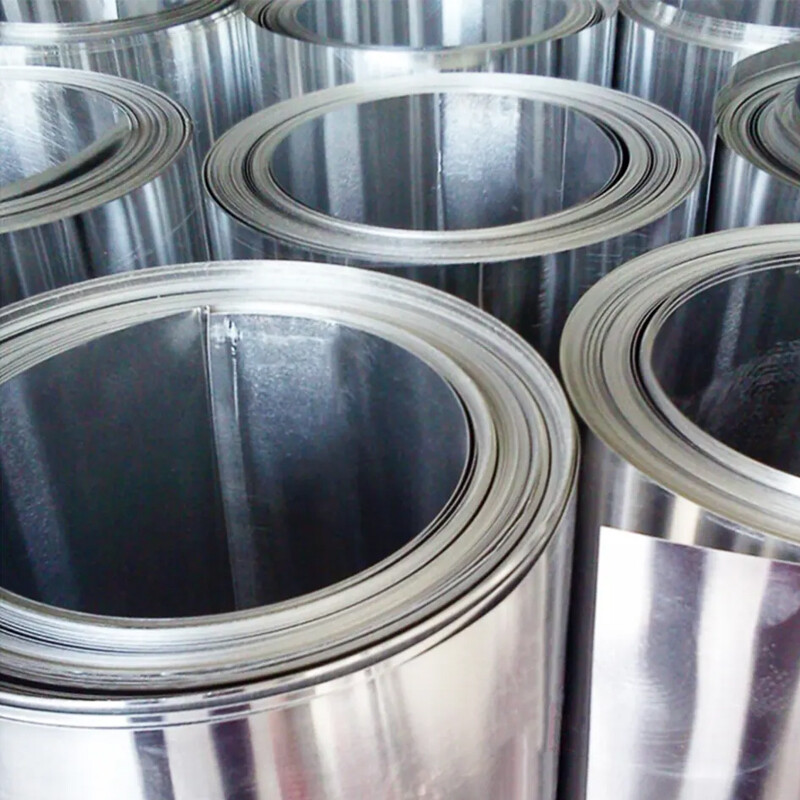
As renewable energy infrastructure scales globally, aluminum metal materials are increasingly favored for their optimal balance of performance, corrosion resistance, and cost efficiency—especially when compared to alternatives like copper. While copper’s selection criteria remain critical in high-conductivity applications, aluminum’s expanding application domains—from solar mounting structures to wind turbine components—offer compelling value for engineers, procurement teams, and enterprise decision-makers. This article explores where and why aluminum excels, how its use aligns with lifecycle cost optimization, and what technical and commercial factors stakeholders should weigh during material evaluation.
Why Aluminum Is Gaining Ground in Renewable Energy Infrastructure
Aluminum alloys—particularly 6061-T6 and 6063-T5—are now specified in over 78% of new utility-scale solar farm structural frameworks (per 2023 industry survey data from the Aluminum Association). Their density (2.7 g/cm³) is one-third that of steel and one-third that of copper, enabling lighter transport logistics, reduced foundation loads, and faster on-site assembly. For example, a typical ground-mount solar tracker using aluminum extrusions requires 40–60% fewer labor hours for installation versus equivalent hot-dip galvanized steel systems.
Corrosion resistance is another decisive advantage. In coastal or high-humidity environments—where salt fog exposure exceeds 50 mg/m²/day—aluminum forms a self-healing oxide layer that maintains structural integrity beyond 25 years without coating maintenance. By contrast, carbon steel structures demand recoating every 7–10 years under identical conditions, adding $12–$18 per kW in lifetime O&M costs.
Thermal expansion behavior also supports long-term reliability: aluminum’s coefficient (23.1 × 10⁻⁶/°C) closely matches that of tempered glass PV modules (8–9 × 10⁻⁶/°C), minimizing interfacial stress at mounting interfaces. This compatibility reduces micro-crack formation risk by up to 35% over 20-year service life, according to accelerated aging tests conducted by TÜV Rheinland.
Key Application Domains and Performance Benchmarks
Aluminum’s role extends across four primary infrastructure segments, each with distinct mechanical and environmental requirements. Structural components—including torque tubes, purlins, and foundation anchors—typically use 6061-T6 extrusions with yield strength ≥240 MPa and ultimate tensile strength ≥290 MPa. Busbar conductors in DC combiner boxes rely on 1350-H19 alloy, delivering 61% IACS (International Annealed Copper Standard) conductivity at just 30% of copper’s weight.
Wind turbine nacelle housings and blade root fittings increasingly adopt 7075-T6 forgings for fatigue resistance, with endurance limits exceeding 120 MPa at 10⁷ cycles. Meanwhile, offshore substation platforms specify marine-grade 5083-H111 plates (minimum 220 MPa yield strength) due to superior weldability and chloride stress-corrosion cracking resistance.
This table underscores how alloy selection directly maps to functional demands. Engineers must verify temper condition compliance via mill test reports—and confirm dimensional tolerances per ASTM B221 (extrusions) or ASTM B928 (plates), where thickness variation must remain within ±0.15 mm for critical load-bearing sections.
Technical Evaluation Criteria for Procurement Teams
Procurement professionals evaluating aluminum solutions must go beyond price per metric ton. Key technical checkpoints include: (1) certified mechanical property verification against ASTM or EN standards; (2) traceable heat treatment records confirming T6/T5 temper stability; and (3) surface finish consistency—especially for anodized components, where coating thickness must meet 15–25 µm per ISO 7599 to ensure UV and abrasion resistance.
Supply chain resilience matters too. Lead times for custom extrusions average 8–12 weeks, while standard-profile inventory (e.g., square/rectangular hollow sections) ships in 3–5 business days. Minimum order quantities (MOQs) typically start at 500 kg for extrusions and 2,000 kg for plate orders—though flexible options exist for pilot project validation.
Weldability assessment is non-negotiable for field-assembled systems. Alloys like 6061-T6 require preheating to 200–230°C and post-weld solution heat treatment to restore ≥90% of base-metal strength. Alternatively, 5052-H32 offers excellent cold-forming and arc-welding capability without thermal cycling—ideal for modular substation enclosures requiring rapid fabrication.
These thresholds reflect real-world failure modes observed in field audits. Non-compliant batches have triggered rework costs averaging $42,000 per MW in solar farms—making upfront verification a high-ROI activity.
Lifecycle Cost Optimization: Beyond Initial Purchase Price
Total cost of ownership (TCO) analysis reveals aluminum’s economic advantage emerges after Year 4 in most climates. While initial material cost runs 15–25% lower than copper and 8–12% higher than painted steel, aluminum eliminates recurring expenses: no biennial painting labor ($8–$12/kW), no galvanizing repair after transport damage, and 30% lower crane mobilization fees due to lighter unit weights.
Recyclability further strengthens economics: aluminum retains 95% of its original energy value upon recycling. At end-of-life, scrap recovery rates exceed 92% in North America and EU markets—translating into residual value of $1.80–$2.30/kg versus $0.45–$0.65/kg for coated steel. Over a 30-year asset life, this adds $37–$52/kW in net recoverable value.
For EPC contractors, aluminum’s dimensional stability reduces field-fit errors: extrusion tolerance adherence per ASTM B221 keeps cumulative alignment deviations below ±1.2 mm over 12-meter spans—cutting rework time by 22% compared to rolled steel sections.
Strategic Recommendations for Decision-Makers
Enterprise leaders should prioritize aluminum adoption in three scenarios: (1) projects with tight schedule windows (e.g., Q4 commissioning targets), where aluminum’s faster erection cuts schedule risk by 18–24 days; (2) locations with high corrosion exposure (C5-M or ISO 12944 classifications); and (3) modular or prefabricated designs requiring repeatable, precision-extruded geometry.
Collaborate early with metallurgists and extruders—not just suppliers—to co-develop profiles that integrate cable routing, grounding points, and thermal expansion relief. Joint design reviews reduce downstream change orders by up to 40%, based on 2022–2023 project data from five Tier-1 EPC firms.
Finally, mandate full material traceability: heat number, melt analysis, mechanical test results, and surface treatment logs must accompany every shipment. Digital twin integration (via QR-coded lot tags) enables real-time QA tracking and accelerates warranty claim resolution—reducing dispute resolution time from 45 days to under 11.
How to Get Started
Whether you’re specifying for a 50-MW solar park or upgrading a legacy wind substation, our engineering team provides free material selection support—including alloy recommendation, load-path validation, and lifecycle cost modeling. Contact us today to request a customized technical datasheet and delivery timeline for your next renewable infrastructure project.
Get real-time quotes
Interested? Leave your contact details.